
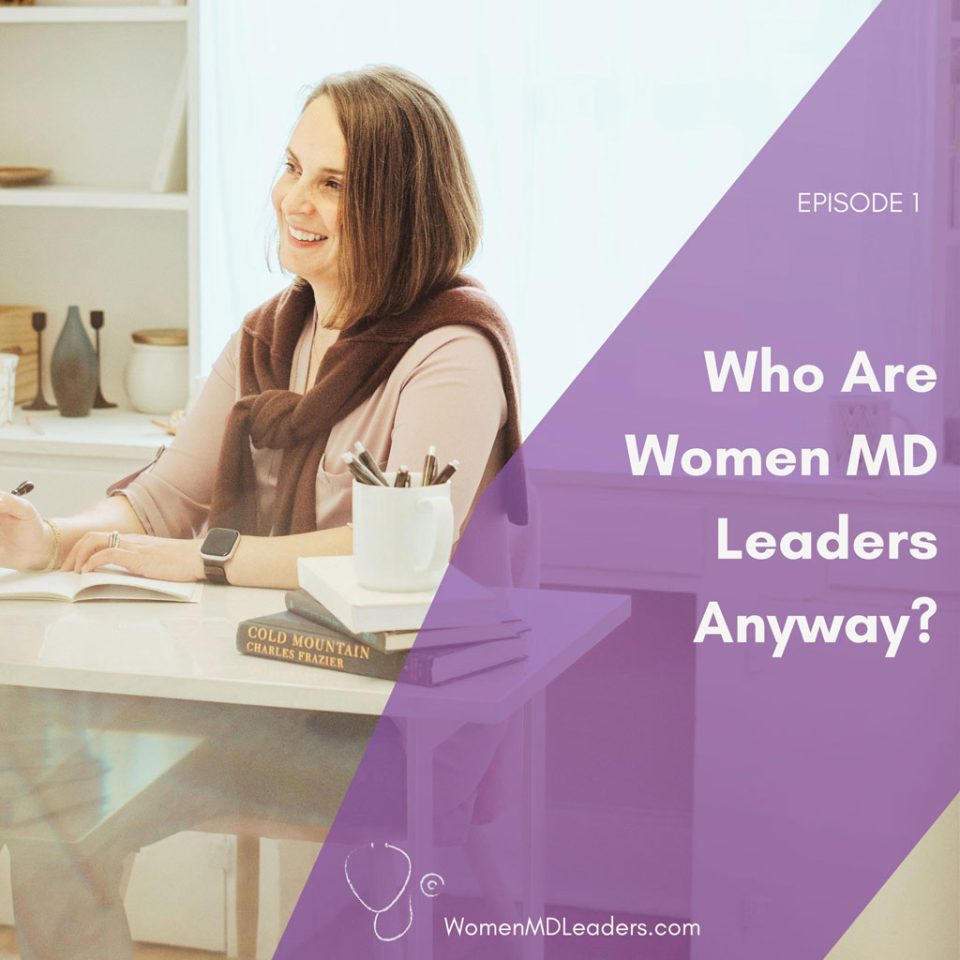
At what point in your doctoring career are you considered a leader? Is it always in the title behind your name? Is it always in the promotion? I’m sure it’s a little different for everyone.
In some ways, I’ve been a leader since childhood — ever since someone first called me “bossy.” I’ve always had a tendency to walk at the front of the line. I was the kid who pushed limits, negotiated for more freedom, and declared the future with the bold clarity only youth can offer.
Time and experience may have softened that vision, but the call to lead is still there — it’s just evolved. We lead every day: as advocates for our patients, families, colleagues, profession, and yes — ourselves.
Being a woman physician leader is a uniquely complex and nuanced role. We give so much of ourselves that we often feel like we’re standing at the bottom of the pyramid. But in reality, our leadership — our presence — is the foundation that holds everything up.
Do You Have the Drive to Be a Physician Leader?
I remember before I even entered medical school saying to myself, “Someday I want to run the hospital.” Of course, at that time, I had absolutely no idea what that meant — all of the work and sacrifice that it would entail to get there and run it — or what that would mean for my life.
I just knew that I had an inner drive that could get me at least 50% of the way there.
That drive took me through medical school, residency, and fellowship into my attending-hood as a pediatric hospitalist. I eventually became chief of my department as well as a regional chair for Pediatric Hospital medicine.
Surprises and Suffering on the Journey to Physician Leader
While on that journey of professional growth and development, I married my best friend, who happens to be a pediatric surgeon and had two beautiful and highly energetic boys.
Then, along with everyone else, I suffered through the COVID pandemic as well as the largest healthcare worker strike in US history. Personally, I suffered from chronic migraines until eventually I admitted to my building depressive symptoms and burn out.
I tried to leave medicine.
I was fortunate to be surrounded by some of the most amazingly supportive colleagues one could ever know. It was because of them that I was able to change my life and find the resources that I needed to turn all of my symptoms of burnout, depression, and migraine around over the course of the next two years.
I’m Driven to Help You Lead
During that time, I learned so many skills that I wish I had known sooner. And now that I know them, I feel I have an obligation to share them.
I feel a pressing need in my life to help women physician leaders, like me and like you, stay on that path to greatness, which includes running that damn hospital if that’s what you want to do.
I want you to have:
- that fulfilling well-rounded life
- that full clinical practice
- that leadership position
We should be changing the world one patient at a time — advocating for our colleagues, our hospital systems, our research, and a better health care delivery future in this country.
The thing is, if you’re anything like me, you’ve probably spent a big part of your life laser-focused on the end goal — so much so that we somehow skipped learning some of the supportive, behind-the-scenes stuff that actually helps us sustain this life in a way that feels fulfilling and long-lasting.
Now, if we all had a stay-at-home partner, a maid, a housekeeper, a chauffeur, a cook, and a secretary… I’m sure we’d have figured this out by now! It’s a shame AI hasn’t solved all of this for us — maybe the next generation will get that luxury. But for now, we’re left to figure it out the old-fashioned way: one step at a time.
Thankfully, I’ve realized we don’t have to do it alone. We’re all navigating this together — and the good news is, some of us have already picked up a few tricks along the way.
And that’s where I come in.
At some point, I noticed my reading preferences shifting. Instead of diving into top medical journals filled with the latest research and clinical updates, I found myself drawn to books, articles, and blogs on leadership development, time management, and boundary setting. I hired an executive coach. I even enrolled in coaching courses myself.
What surprised me most? That training didn’t just improve my leadership presence in the hospital — it also made a meaningful difference in my relationships with my kids and my spouse, improved my time management, my own self care, and personal confidence.
Coaching Women Physician Leaders to Improve Lives
All the reasons I went into medicine — the desire to help, to serve, to make a real impact — are the same reasons I’ve now moved into coaching women physician leaders. I know it sounds cliché, but I truly want to help. I want to support people like me — people who may be struggling quietly, just like I was.
It doesn’t have to be that way. We deserve better — and I’m here to help make that possible.
So, every week I hope to deliver to you some tidbits, insights, and skills on topics that I’ve learned about over time to include themes about boundaries, imposter syndrome, perfectionism, finding your voice in the boardroom, negotiation, getting your time back, and saying no when you need to.