
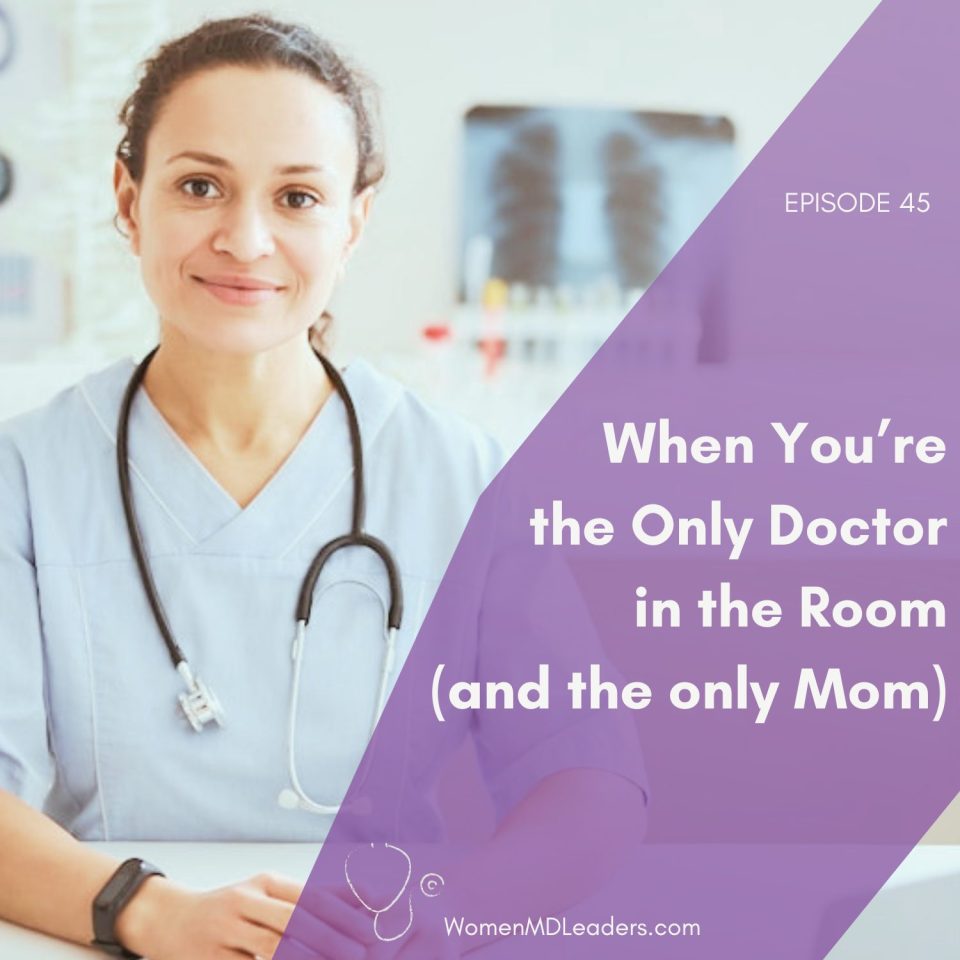
The Dual Identity of a Doctor Mom: Why the Friction Between Work and Home Is Real
I travel for locums work. It’s a solid week where I get to soak in being a doctor without the day-to-day tasks of being a mom. But both parts of me aren’t always present. There is a friction that happens when you physically separate from one identity — and it carries through psychologically at all times.
In my locums capacity, this friction is the loudest at the beginning and end of my week. When I worked every day, it was present with every shift. Every transition from doctor to mom. Every transition from mom to doctor.
If you’re a woman in medicine — if you’re a doctor and a mom, or a doctor and a partner, or a doctor and anything else you love — you already know what I’m talking about. You know the way one identity keeps tugging at you while you’re trying to be fully present in the other. And the small, quiet ways you’ve tried to manage that tug over the years.
Today’s episode isn’t a how-to. It’s simply a reflection and maybe a permission slip (if you needed one). I want to name something most of us are carrying quietly, hold it up to the light, and see what happens when we stop pretending it isn’t there.
The Friction Between Doctor and Mom Doesn’t Stay in One Place
Here’s what I’ve come to understand: the physical separation between roles is the easy part. You leave the house. You drive to the airport. You walk into the hospital. The hard part is that the other identity comes with you anyway.
When I leave for locums, the drive to the airport is the first place I notice the shift. I park my car and check my bag, and suddenly it’s quiet. Being solo on a plane is quieter than my everyday life. The hotel room is quieter than my everyday life. And for me, there is this odd sense of letting go when I check in alone — like a pressure valve finally being released. Like the rice cooker steam coming out. All the planning is done. The logistics are handled. I get to step into being just one human and a doctor for a few days.
And I’ll tell you something I had to work hard to believe: that relief is allowed. Feeling lighter when you step into the doctor role doesn’t make you less of a mom. Feeling lighter when you walk back into your house at the end of the week doesn’t make you less of a doctor. The relief is just relief. It isn’t evidence of anything broken about you.
But we don’t live in a culture that lets women hold both of those identities easily. All of the choices we make along the way:
- Our parenting choices
- Our work choices
- Our schedules
Every piece of it gets observed and measured against some apparent norm.
And after enough years of that, you don’t even need anyone to say anything out loud. You start doing the judging for them, ahead of time, in your own head. I know I did. A lot of what I was carrying wasn’t even said to me. I just believed I was supposed to feel guilty, so I did.
The Goodbyes I Engineered Out: A Doctor Mom’s Story
When my kids were small, I worked a whole smorgasbord of days, nights, and weekends as a hospitalist. From the time both of them were three months old — because that’s when I came back from maternity leave — there were many evenings I left for work at 4 p.m. I wasn’t there after school. I wasn’t there for dinner. I wasn’t there for bedtime, maybe two nights a week, for their whole lives. I missed Christmases. I missed Thanksgivings. We had a wonderful nanny they were bonded to, and we made it work.
But here’s the part I don’t think I’ve really reflected on before now. I did not want kids who cried when I left the room. I knew that crying children who just want you really pulls at your heartstrings, and I knew if I let that be part of my goodbye routine, I would not survive it.
So I engineered it out. I created an environment where I didn’t always say goodbye. I would slip out. I would let our nanny take the lead. I removed the moment of separation from the equation, very intentionally, so I could leave for the job I loved without feeling crushed every single time I walked out the door.
And that goes against my nature. I’m someone who wants to connect, who wants to stay close, who wants to say I love you on the way out the door. But back then, the only way I could keep doing the work comfortably was to design certain moments out of my life. That was a choice I made to protect myself — and honestly, to protect them too.
My kids are older now. They don’t cry when I leave. And one of the small, quiet projects of this phase of my life is building those goodbyes back in. We say goodbye now. We say goodnight. We say I love you on the way out the door. I get to be the woman I actually am again, in those moments, because the season I needed to armor up for has passed.
If you’ve done some version of that yourself — engineered something out of your life because you couldn’t carry the full weight of it and still go to work — you are not the only one. That is a very human thing women in medicine do all the time. And it doesn’t make you less of a mom. It made you a mom who figured out how to keep going.
You Are Two Things at Once: How Women Physicians Hold Both Identities
The world has shown us how to treat these two identities as a trade-off.
As if every minute I spend being a doctor is a minute stolen from being a mom. As if every minute I spend being a mom is a minute taken from being a doctor.
That’s just not true.
When I travel for locums work, I am not less of a mom. When I’m home running my business, driving carpool, and scheduling playdates, I am not less of a doctor.
I am two things. I have always been two things.
And the strange gift of where I am now is that I get to see how each one feeds the other. I am a better doctor now that I get to show up rested and ready. I am a better doctor now that I’m not also tracking every detail of my family’s lives during the shift. And I am a better mom when I get to be the one in the carpool line at 3 p.m.
Because here is something I did not know in my old life: there is a 10-minute window in the car, right after they get in, where everything spills out. The thing that happened at recess. The shift in who is sitting where at the lunch table. The little pressure they’ve been carrying that finally surfaces because the day is over and they are with you.
I used to love that my kids rode the bus. It saved me so much time. I had no idea what I was missing. Now I get to be the one who hears it first, and that has changed what I know about my children. It has bolstered that connection I value so much.
On the other side of it, the locums weeks give me something I cannot get at home. Quiet. Rest. The full, undivided use of my brain on one thing at a time. The chance to do the work I trained for as the only thing I’m doing that day. It kind of feels like residency. I come back to my family different. Better. More myself.
Permission for Women Physicians to Be Both Doctor and Mom Without Apology
So here’s what I want to leave you with today.
If you are a doctor and a mom, or a doctor and a partner, or a doctor and anything else you love — you are allowed to feel the friction.
You are allowed to feel relief when you step into one role. You are allowed to feel relief when you step into the other.
You are allowed to have engineered things out of your life in seasons you couldn’t carry them, and you are allowed to build them back in when you can.
You don’t have to choose. You don’t have to apologize for the choices you made when the season was hard. You don’t have to keep doing the judging for a world that was never going to be satisfied anyway.
Notice where this friction shows up in your own life this week. Notice the moments where you carry one identity into the other.
And then, if you can, just let yourself be fully present in the part of your life you’re in right now. Own both. Be proud of both.
You are two things. You have always been two things. You are allowed to be proud of both.
Thanks so much for listening. If you enjoyed this, find me on LinkedIn @stephanieyamout and leave me a note. I’d love to hear your thoughts. You can find more resources and coaching at WomenMDLeaders.com.
I’m Dr. Stephanie Yamout — thank you for listening, and for leading with heart.