
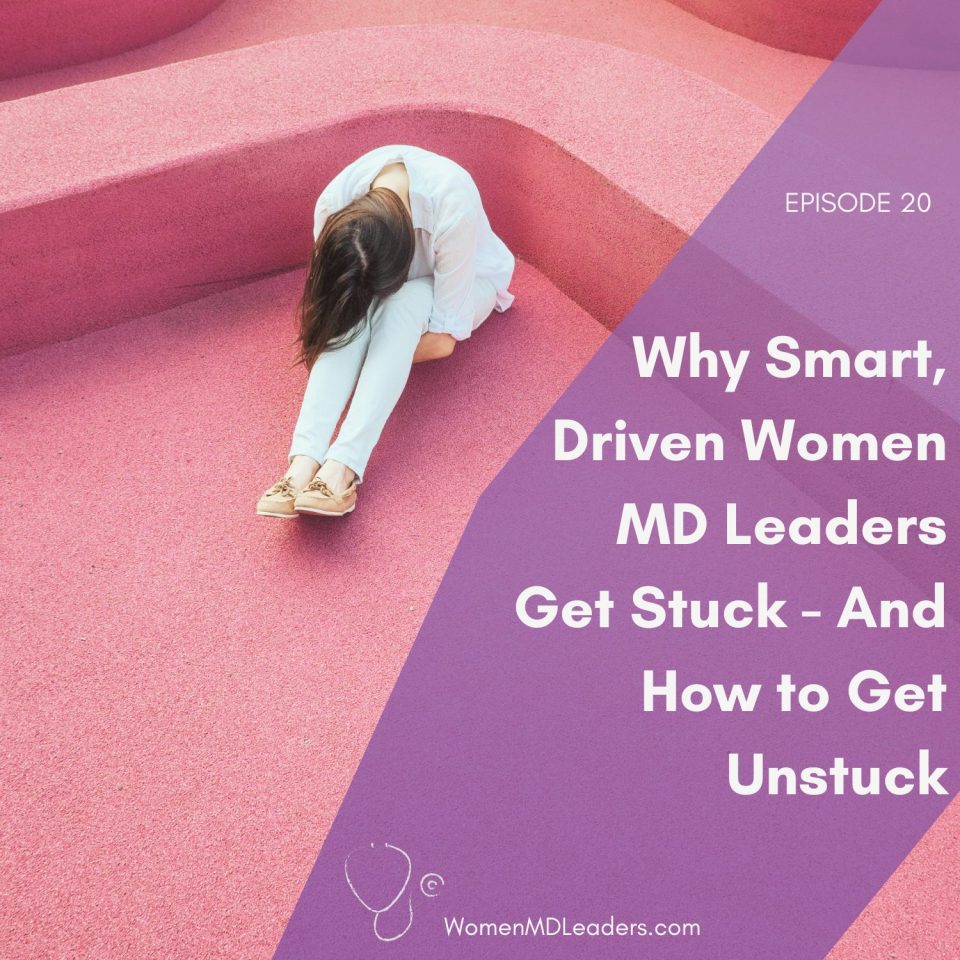
Burnout is a hot topic in medicine. It’s also near and dear to my heart — as a survivor, now a thriver.
What I find again and again, especially in this post-pandemic world, is that many of us are still exhausted in a way that doesn’t quite make sense on the surface.
The adrenaline of the pandemic is gone.
The uncertainty has faded.
The masks, the testing mandates, the policy changes — all of it has settled.
But we haven’t.
And if you’ve wondered why you’re still tired… still overwhelmed… still not quite yourself… you are not alone. There is a reason.
Throughout our lives and careers, we were sold the lie, “I can do it all if I just try harder.”
But the truth is this: you’re exhausted because the system trained you to ignore your needs — not because you’re inadequate.
And I promise, there is a way out — and it starts with redefining success on your terms.
Over the next 3 episodes, I want to talk about how to “burnout-proof” your career and leadership. And today we’re getting honest about why smart, capable, high-achieving women get stuck — and how to recognize the moment when it’s time to make a shift.
Burnout Is On The Rise
Burnout is on the rise.
And for many healthcare providers, the recovery has actually been harder — and longer — than the pandemic itself.
It sounds counterintuitive, right?
We survived the crisis.
We adapted every single day.
We worked through fear, uncertainty, impossible workloads, and the emotional weight of humanity at its most vulnerable.
So why now?
Why, when the world has calmed down, do so many of us feel more worn down than ever?
The Post-Adrenaline Crash
During the pandemic, we operated on adrenaline, mission, purpose, urgency.
Adrenaline will carry you far… but it will not carry you forever.
Now that the emergency has ended, we’re discovering what was left underneath:
- chronic understaffing and overstretching
- emotional exhaustion
- unprocessed stress
- misalignment with our values
- and the systems around us that haven’t yet healed
And while we don’t say it out loud — or we whisper it only to ourselves — many of us have moments where we think:
“I could just quit. I really could.”
I’ve been there.
Not just in my head — I’ve said those words out loud.
My Turning Point
For me, it reached a point where I knew something had to change.
Because if nothing changed, I was going to lose myself.
I was becoming someone I didn’t recognize — someone I didn’t even like.
And the hardest part was this:
At that moment, I was only seeing from one perspective.
A perspective that was utterly… and completely… spent.
It took hitting that wall to finally turn myself around and do what I should have done a whole lot sooner:
Focus on myself.
On my health.
On my spirit.
On the foundation of me — the person my family depends on, my patients depend on, my team depends on.
Because none of them — and nothing I care about — can afford for those things to break.
The Simplest Tool: Quit What’s Getting in the Way
And here’s what I learned:
Sometimes the most powerful step is not to add something to your life…
It’s to quit the things that are taking up valuable space.
To turn your attention back to your highest priorities, your highest values, your deepest needs.
For me, that meant:
- Delegating where I used to over function
- Setting boundaries that protected my healing
- Stopping — literally stopping — tasks, roles, and expectations that were draining me
There were things I was carrying that did not belong to me or could naturally be delegated.
Things preventing me from recovering.
Things occupying space that I desperately needed back.
Some questions for you to consider:
Where will you be next year if nothing else changes?
Is that ok with you?
What is one small thing you can change or quit today that will give you some space?
My Personal Recovery Blueprint
For me, step one was getting control of my migraines and depression.
And that wasn’t a “take a day off and it gets better” situation.
I went all in:
- Neurologist
- Acupuncturist
- Therapist
- Optimizing sleep
- Meditation
- Yoga
- Walking
- Intentional nourishment
Every angle.
Every modality.
Because I knew:
I cannot get back to myself if I keep on this same path.
But here’s the truth we often forget:
Your career will not magically give you time to heal.
You have to take it back.
And that means… quitting what doesn’t serve you and reclaiming time for what does.
In order to commit to these interventions that were so valuable in my recovery path, I needed to quit things that were farther down on Maslow’s hierarchy of needs at that specific time:
- Overnight call
- Volunteering at school
- Grocery shopping and cooking dinner
It all got put on hold or delegated for a while.
Healing Takes Time — But It Works
Let me be honest:
This is not quick.
This is not a “one weekend away and everything resets.”
It takes many small, daily habits — tiny deposits into your well-being — repeated over and over until they heal you.
But the payoff?
A healthy, grounded, joyful woman who is one of the most powerful forces on earth.
She is effective.
She is connected.
She is clear and compassionate.
She smiles more.
Her presence lifts everyone around her.
And she becomes someone she recognizes again… someone she loves again.
And here’s the beautiful part:
Many of the habits you build during recovery stay with you long after the crisis has passed.
They don’t just heal you — they hold you.
For me, some of those habits have become almost like a cozy blanket.
I still go to bed shortly after my kids so I can get close to eight hours of sleep every night.
I still read something every single day for my own growth and self-improvement.
Why Smart Women Get Stuck
So why do smart women — brilliant, caring, driven women — get stuck?
Because we’ve been conditioned our whole lives to push through, to persevere, to care for everyone else first.
- We weren’t taught how to pause.
- We weren’t taught how to quit what isn’t working.
- We weren’t taught how to protect ourselves before pouring into others.
But we can learn.
And this — this moment, right now — might be where you start.
Your Burnout Blueprint Moment
So here’s the question I want you to hold today:
What is taking up space in your life that no longer serves you?
What would you quit — lovingly and intentionally — to make room for your own recovery?
Let this be the beginning of your burnout blueprint.
A blueprint that leads you back to yourself.
A blueprint that helps you rise without losing what makes you… you.
Thanks so much for listening. If you enjoyed this, find me on LinkedIn @stephanieyamout and leave me a note. I’d love to hear your thoughts! You can find more resources and coaching at WomenMDLeaders.com.
I’m Dr. Stephanie Yamout — thank you for listening, and for leading with heart.